Own part of a real
apartment building.
Collect a share of the
rent every month.
Real estate that used to be reserved for the big guys. Made available to the public through SEC-regulated shares.
We’ll email you when the first listing is live
You’re on the list. We’ll be in touch.
Investing in institutional assets has been out of reach for the public.
Somebody owns the properties people rent from, and it’s probably a fund. There’s no secret to how they make money. Rent is one of the bills an American household pays every month, and it goes to whoever owns the property. Three things keep it out of reach.
$50,000
Minimum cheque
4/5
Disqualified by accreditation
3-5 Yr
Typical lock up
RenTrade solves these issues and unlocks the asset class.
We source and manage larger multifamily properties and split them into shares. You see the address, you pick it, and the rent follows.
How it works
What we take care of
Plays automatically · drag to scrub
Plays automatically · drag to scrub
What you are able to do
Plays automatically · drag to scrub
Plays automatically · drag to scrub
What a listing looks like.
One building, all the way through: what you would own, what it costs, and the work behind the price.
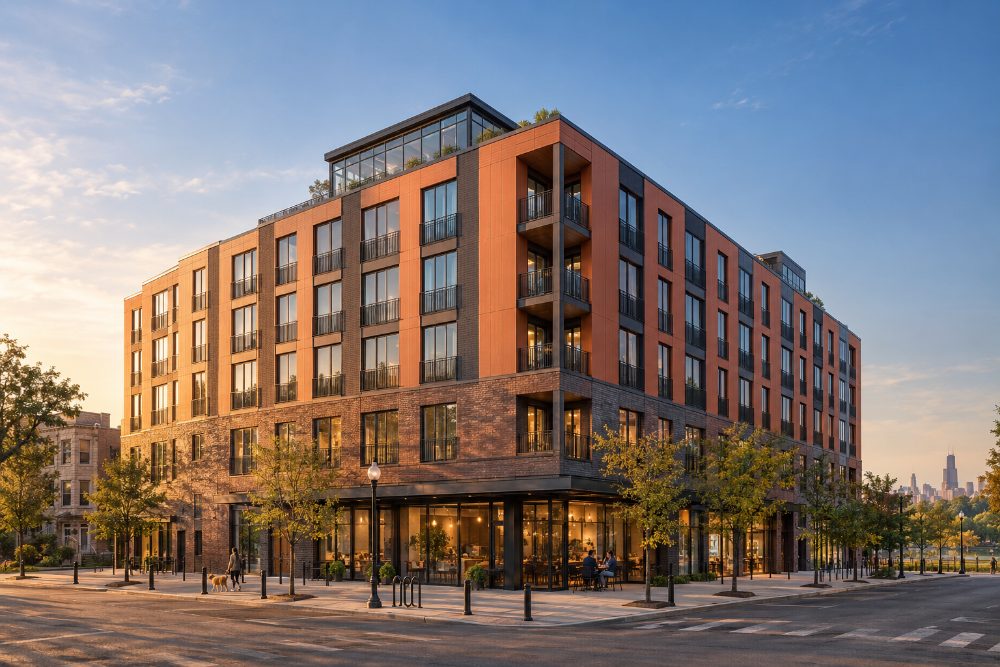
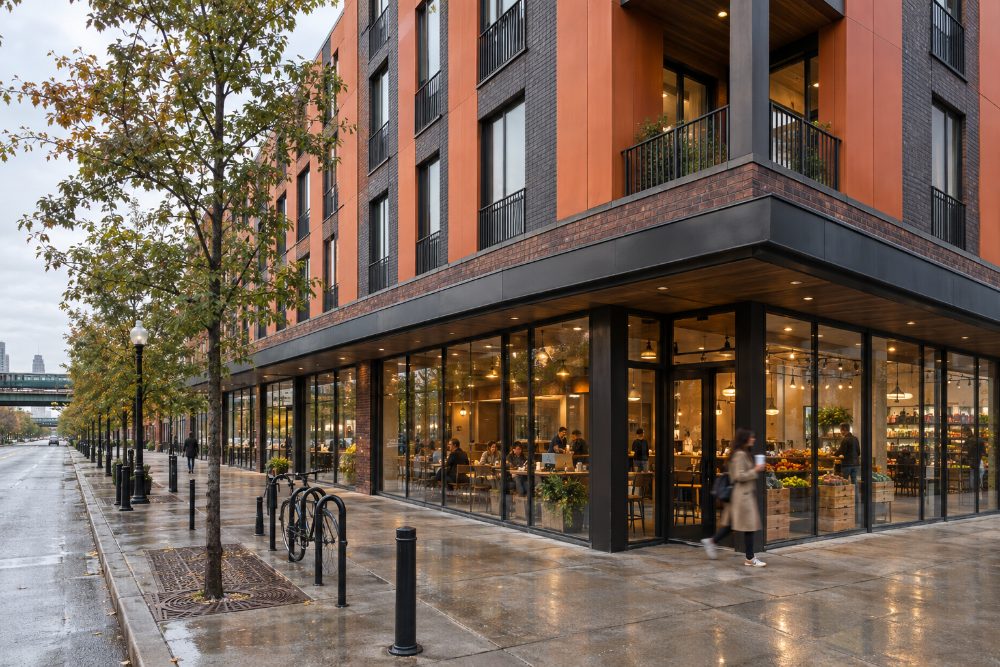

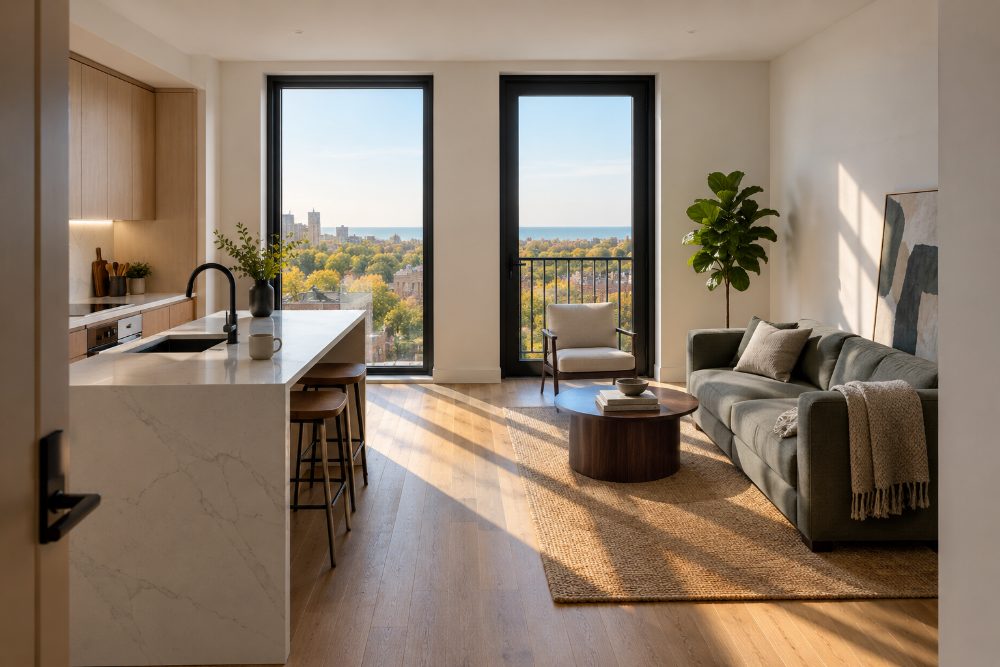
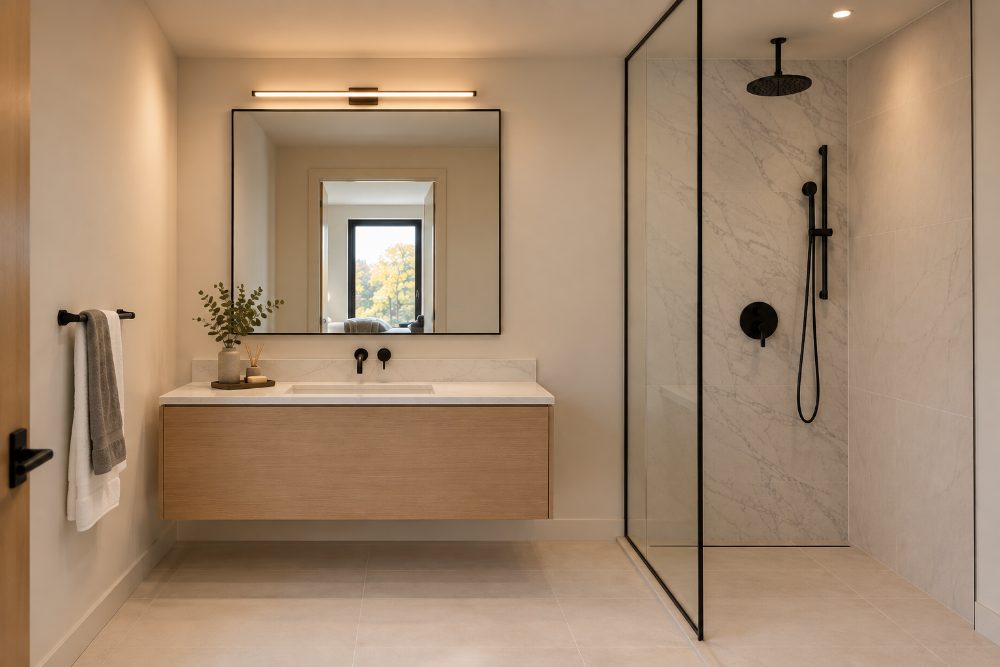

1 / 6
Plaisance Row
East Woodlawn · Chicago, IL
96 units · 290,000 shares
Per share
$60.00
Net yield
6.2%
Monthly / share
$0.31
Not yet open · Join the waitlist
Spread 0.32
* Illustrative listing
Property
Plaisance Row is a six-story building completed in 2023, finished in red-brown brick and terracotta panel, containing 96 apartments above approximately 6,000 square feet of ground-floor retail. It is located in East Woodlawn on Chicago’s South Side, one mile south of the University of Chicago campus, two blocks from the Cottage Grove station on the CTA Green Line, and three blocks west of Jackson Park. Occupancy at the most recent reporting date was 94 percent.
Unit mix
| Type | Count | Avg rent | Avg SF |
|---|---|---|---|
| Studio | 12 | $1,450 | 510 |
| 1 bed | 44 | $1,795 | 715 |
| 2 bed | 32 | $2,295 | 1,020 |
| 3 bed | 8 | $2,750 | 1,285 |
Finishes and amenities
Units are finished with white oak cabinetry, quartz countertops, matte black fixtures and in-unit washer and dryer. Most include a Juliet balcony; corner units open onto a recessed loggia. Ground-floor retail is fully let to two tenants, a coffee shop and an independent grocer. Common areas comprise a lobby and parcel room, a co-working lounge, a fitness room, bicycle storage, a dog run and a rooftop terrace.
The building
| Units | 96 |
|---|---|
| Occupancy | 94% |
| Valuation | $17,400,000 |
| Price per unit | $181,250 |
| Shares outstanding | 290,000 |
| Price per share | $60.00 |
| Annual distribution | $3.72 / share |
| Monthly distribution | $0.31 / share |
| Net yield | 6.2% |
The money, per year
| Gross rent | $2,301,840 |
|---|---|
| Vacancy & concessions | ($138,110) |
| Rental income | $2,163,730 |
| Property tax | ($379,000) |
| Maintenance & reserves | ($182,556) |
| Other operating | ($393,550) |
| Operating expenses 44% of rental income | ($955,106) |
| Platform fee, 6% of rental income | ($129,824) |
| Distributed to shareholders | $1,078,800 |
About $43,300 of the platform fee, roughly a third of it, pays for the annual audit, the SEC reporting and your tax documents. Those are the costs of running a registered public offering, and they come out of our fee, not out of the building.
Other operating covers on-site staff, property management, insurance, common-area utilities and administration. Maintenance & reserves covers repairs, grounds, snow and trash, and money set aside for future capital work.
+43%
Rents since 2015
1M
Visitors projected
$181,250
Per door here
$280,000+
To build new
The demand is already here
This is a corner with an anchor on either side of it. The University of Chicago is a mile north and has spent a decade building its own demand: Harper Court, 518,000 square feet of hotel, retail and office, is fully leased, and its second phase put a thirteen-story research building on 53rd Street with the Pritzker School of Molecular Engineering and a startup incubator in it. A ten-minute walk east, the Obama Presidential Center opened in Jackson Park on Juneteenth 2026, projected to draw up to a million visitors a year. The neighborhood did not wait for either of them: rents around the campus are up 43% since 2015, and a Woodlawn one-bedroom that went for $1,200 now runs about $1,800. None of that is a projection about what might happen here. It is what has already happened, and it is why a 2023 building leases at 94%.
The discount is financial, not physical
Chicago barely built through the last cycle, and it shows: rents up 3.3% year over year, low vacancy, and sales volume up 67% in the second quarter of 2026 as capital came back. Building Plaisance Row today would cost well north of $280,000 a door, against the $181,250 it is listed at. What makes that gap available is not a fault in the building. Nationally, $162 billion of multifamily loans mature in 2026, up 56% on last year, with another $168 billion behind it in 2027, and values have reset 20 to 30% below the 2022 peak while hard costs went the other way. The buildings are fine; the capital stacks are not. That is the whole thesis: buy sound 2023 construction from a stressed balance sheet, at a basis that a builder could not match today.
* Plaisance Row is an illustration of how a RenTrade listing will work. It is not a real building, not a real offering, and nothing here is an offer to sell or a solicitation to buy securities. The figures shown are modeled on current Chicago market data and are not a promise of what any future listing will pay. Real estate is illiquid and can lose value.
The questions you should ask before you buy.
You own shares in one building and nothing else. RenTrade is organised as a series LLC, which means every property is its own series with its own shares, its own accounts and its own books. When you buy into a building you own a piece of that building, not a fund, not a portfolio, and not RenTrade the company.
Underneath each series sits a subsidiary that holds the deed, the mortgage and the leases for that one property. You never have to deal with it. It exists so that one building’s debts can never reach the people who own a different building.
That structure is also what lets you choose. You can look at the photographs, read the rent roll, and decide you want that particular building on that particular corner. A REIT cannot offer you that, and neither can a fund.
Not RenTrade, and that is deliberate. Your money never sits in a RenTrade bank account. It moves through a regulated escrow and custody provider, which is a licensed firm whose actual business is holding customer money and keeping it separate from ours.
Your shares are recorded by an SEC registered transfer agent, an independent company that maintains the official register of who owns what. If RenTrade disappeared tomorrow that register would still exist, and you would still own your shares.
Our job is to find the buildings, run the platform, and hold the people managing your property to their contract. It is deliberately not to hold your money.
Under Regulation A+, Tier 2, which is the part of US securities law that allows a company to sell shares to the general public rather than only to accredited investors. It is the reason you do not need to be wealthy to be here. Every offering has to be qualified by the SEC before a single share can be sold, which means the offering document covering the building, the numbers, the fees and the risks is filed and reviewed before it ever reaches you. Adding a new building means filing again for that building.
Once an offering is qualified the reporting does not stop. There are audited annual financial statements, semi-annual updates, and current reports whenever something material happens. Those filings are public and they are permanent, and part of your platform fee is what pays for them.
A registered broker-dealer acts as broker of record for the offering, and once the shares are qualified they become eligible to trade on a registered alternative trading system, which is an SEC regulated marketplace rather than an order book we run ourselves.
Tenants pay rent, the building’s operating costs, reserves and fees come out, and whatever is left is distributed to shareholders every month, straight into your account.
Getting out works differently from almost every other way of owning property. Once an offering is qualified, Regulation A+ shares are freely transferable: there is no multi-year lock-up, only a minimal holding period, and after that you can list your shares for sale on any weekday on a registered alternative trading system.
It is worth being clear about what that is, because we did not build it and we do not run it. An alternative trading system is a marketplace registered with the SEC and operated by a licensed firm, which reports every trade to the regulator itself. The venue we have settled on is not waiting to be switched on: it has been running for years and already carries the secondary market for other fractional property platforms, matching real buyers and sellers in this exact asset class. We list the building there, and that is the end of our involvement. We take nothing when you sell, and the price is whatever someone will actually pay, set by the people trading rather than by us.
What we will not tell you is that selling is guaranteed. A registered marketplace gives you somewhere to sell. It does not give you a buyer. Early on, while a building has few shareholders, the book for it will be thin, so there may be no buyer at the price you want, or at any price at all, on the day you want to sell. Real estate is illiquid, and splitting it into shares makes it less illiquid rather than liquid.
← Select a question to open it